
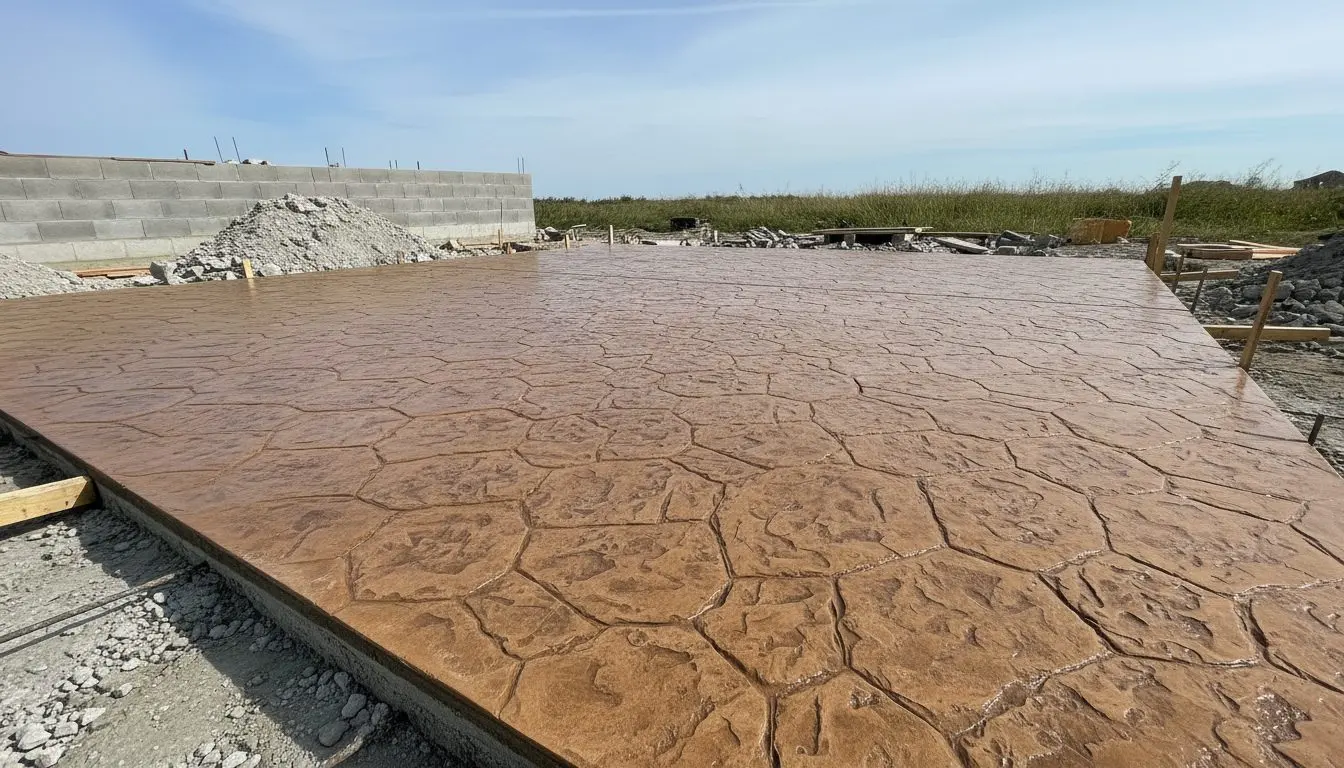
Decorative Concrete in Bloomington
Stamped, Stained and Polished Concrete Finishes
Color mixed through the full slab, patterns stamped while the concrete is workable, and every finish sealed to handle road salt, not just to look good on pour day.
Choosing a finish that survives a Bloomington winter
You get a decorative finish sealed to handle salt and freeze-thaw, not just a pattern pressed into a plain gray slab.
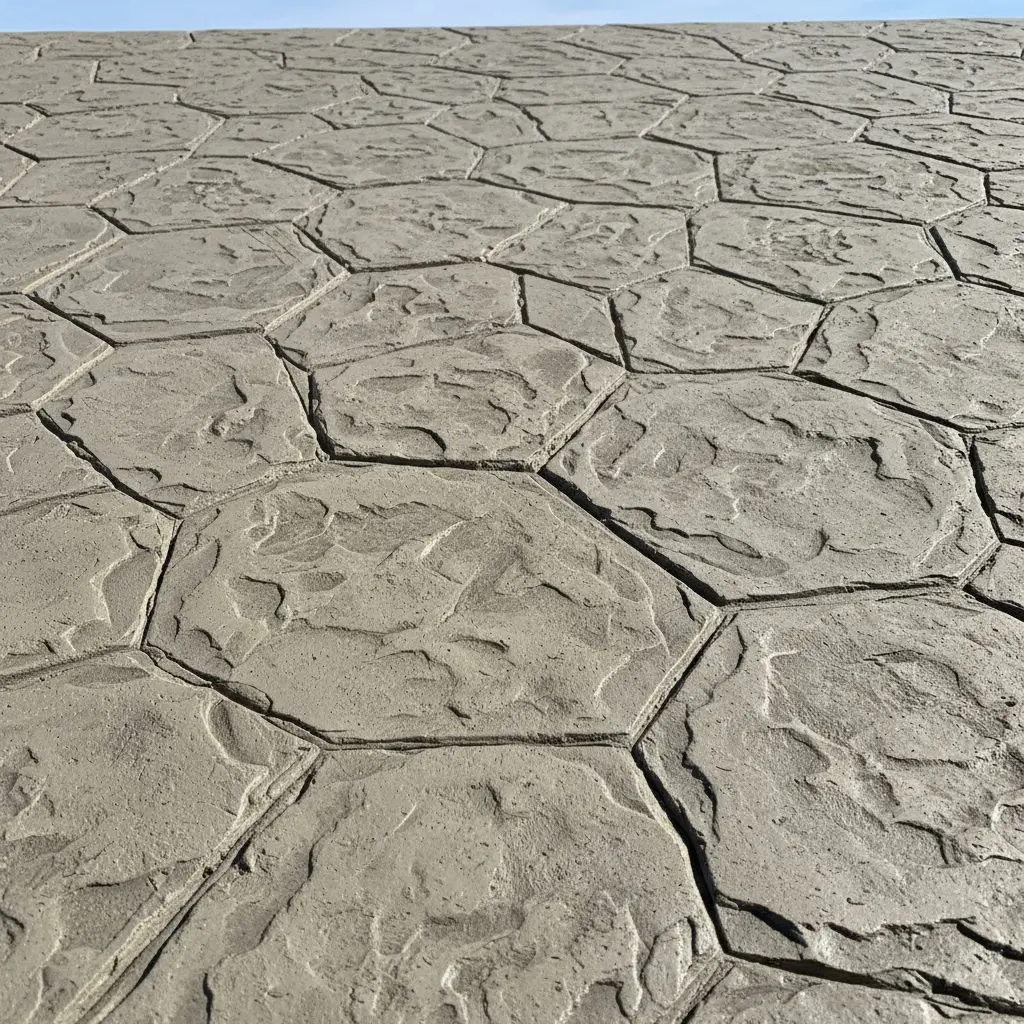
This group covers concrete chosen for how it looks, stamped patios, walkways, stained and polished floors, exposed aggregate driveways, integral color pours and overlays over existing sound concrete.
A structural slab poured with no finish decision to make is Foundations and Slabs. A cracked surface that needs fixing first belongs on Concrete Repair.
We have stamped, stained or polished more than 150 patios, walkways and floors around Bloomington and Normal since work began in 2008.
Stamped patios and walkways are the most requested job, followed by stained or polished garage and basement floors, then exposed aggregate driveways for homeowners wanting texture without a full stamped pattern. Overlays over an existing slab that is sound but plain or worn come up often where full replacement is not needed.
Every colored or stamped surface gets a full 28-day cure before any sealer goes on, because sealing early traps moisture and blisters the finish within a season.
A homeowner planning a patio wants color that still looks right in five years, not just on pour day. Another with a plain gray garage floor wants it stained or polished without repouring a fine slab.
Call (309) 555-0142 for a free estimate on a stamped, stained or polished finish. You will go from a plain gray slab you tolerate to a surface you actually chose the look of.
What our decorative concrete work covers
One crew handles the color, the stamping and the sealing, so the finish is consistent from the first panel to the last.
- Stamped patios and walkways
- Stained and polished interior floors
- Exposed aggregate driveways
- Integral color pours
- Decorative overlays on existing sound concrete
- Control joint pattern matching
- Sealing and resealing of existing decorative work
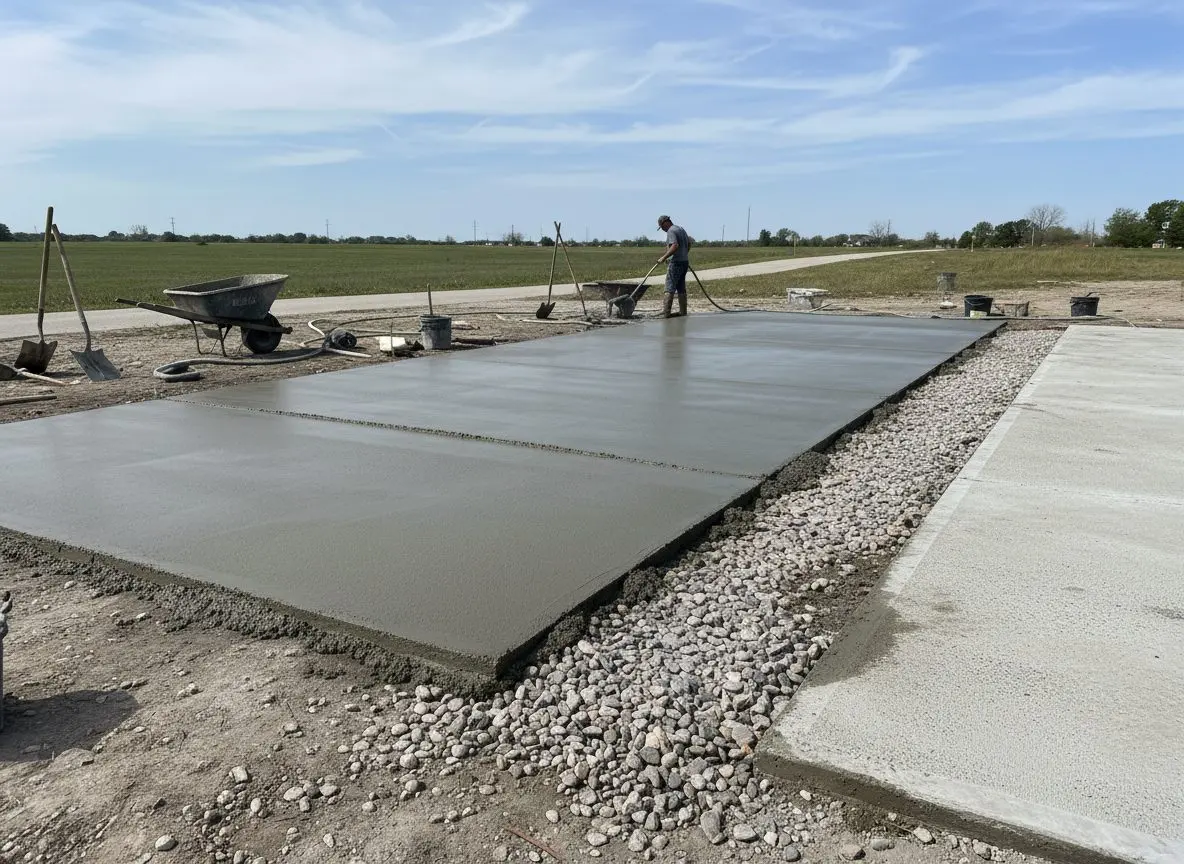
A new stamped pour or a decorative overlay, which one fits
An existing slab does not always need to come out to get a new look.
A decorative overlay works where the existing concrete is structurally sound, level and free of active cracking. The overlay bonds directly to it, and stamping or coloring goes into the new surface layer rather than needing a full demolition and repour underneath.
A slab that is cracked, settled or has a failed base needs to come out before any decorative finish goes on it, because an overlay bonded to failing concrete fails with it. A full new pour is also right where the pattern needs a slab thickness or edge detail the existing concrete cannot give.
We check the existing slab's condition on the visit and tell you honestly whether an overlay will hold or whether the job needs to start from a full pour, including on the jobs where the overlay is the cheaper and correct answer.
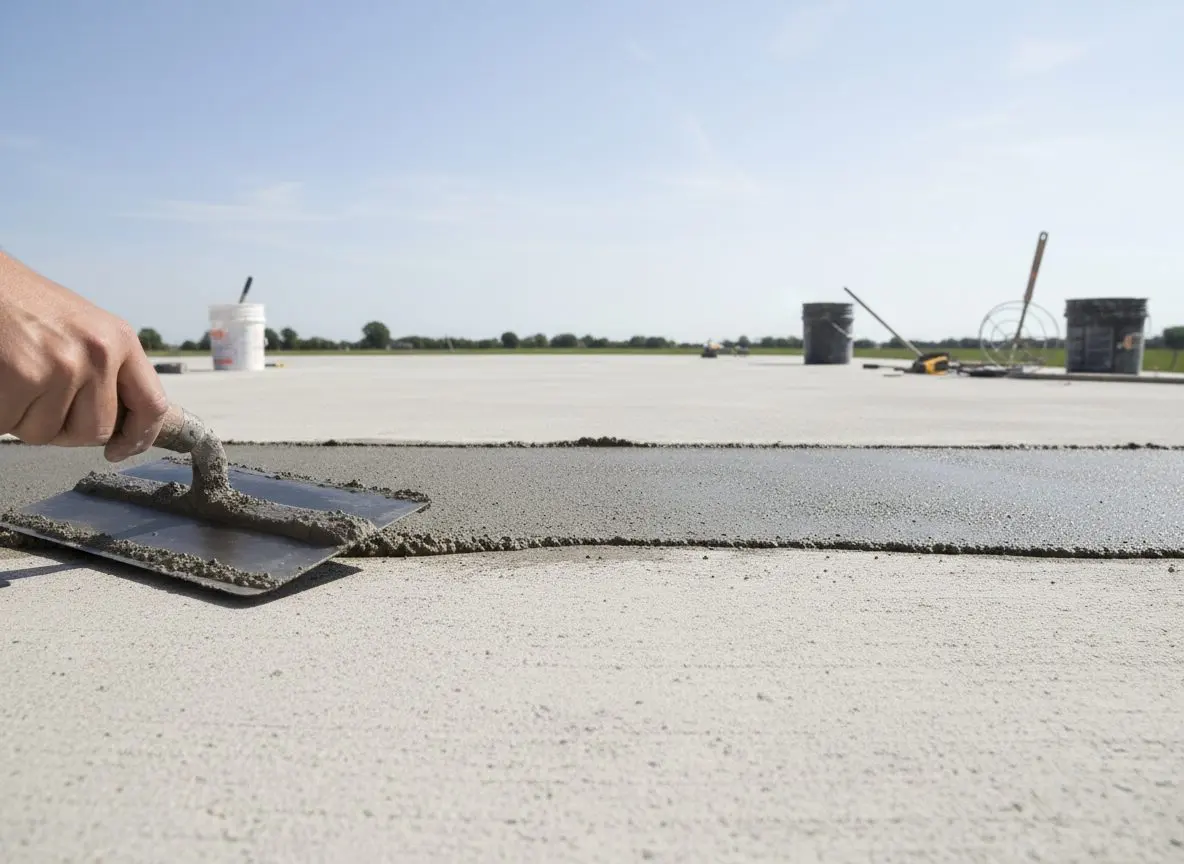
The finish and sealing spec every decorative pour gets
Every stamped surface gets color through the full slab and a sealer rated for road salt, not a topcoat on a plain pour.
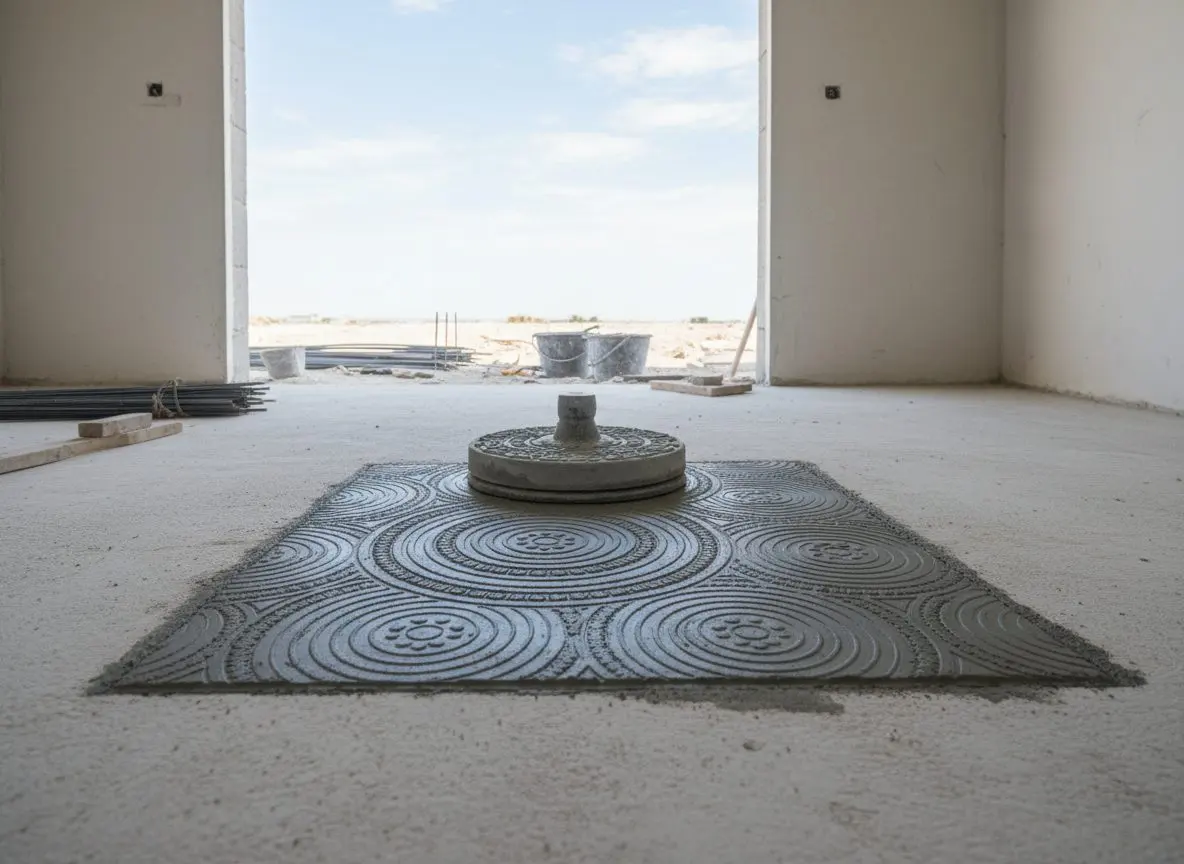
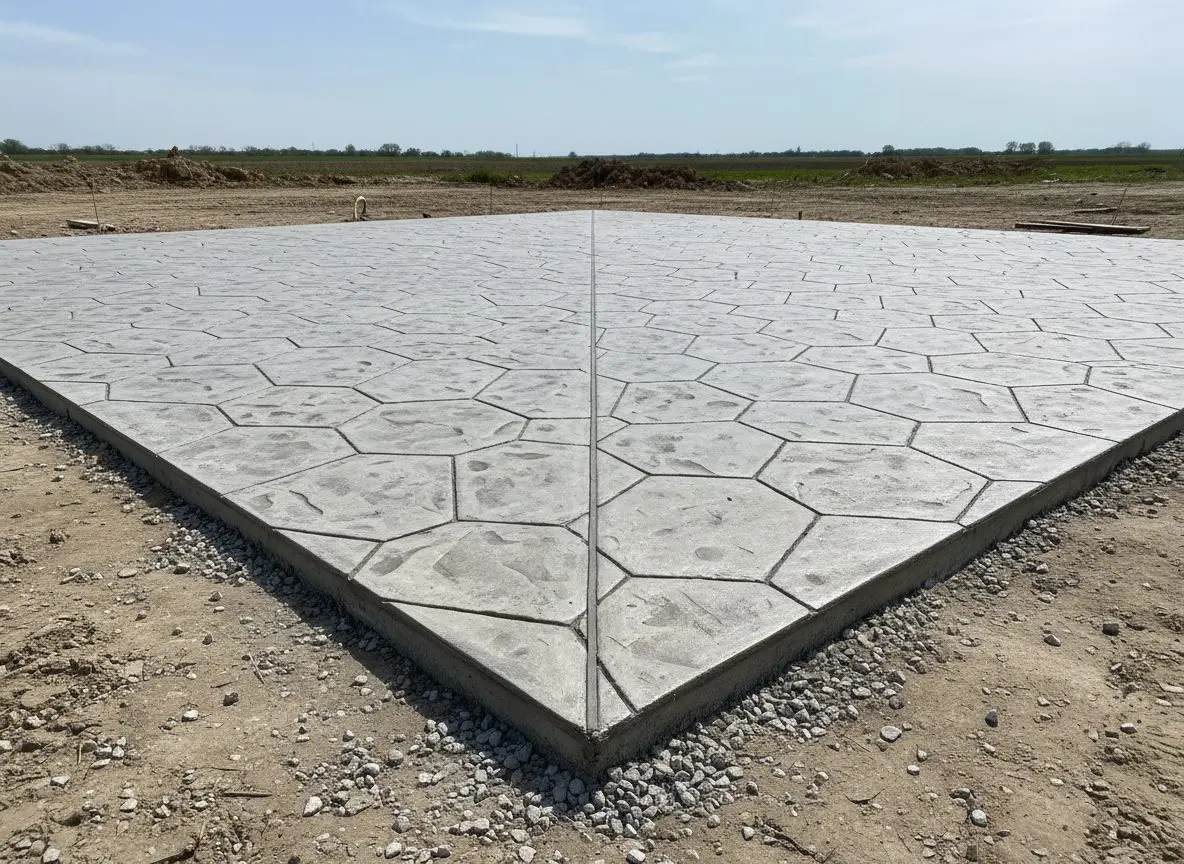
Color goes in as an integral additive through the full depth rather than a hardener dusted on top, so a chip or scratch does not expose gray concrete underneath. Patterns are pressed in with a textured release agent while the slab is still plastic, then washed and detailed once set enough to hold the texture.
Every surface cures a full 28 days before sealing, then gets a UV-stable acrylic or polyurethane sealer rated for salt, not a basic coating that breaks down under one winter of deicing. Exposed aggregate is seeded and washed to a consistent depth, and joints are tooled to follow the pattern rather than cut through it.
- Integral color mixed through the full slab depth
- Textured release agent for true stamped detail
- Full 28-day cure before any sealer is applied
- UV-stable acrylic or polyurethane sealer rated for salt
- Control joints tooled to follow the stamp pattern
- Exposed aggregate seeded and washed to consistent depth
Call and we will walk you through the pattern, color and sealer options before anything gets priced.
(309) 555-0142Why does one stamped patio cost more than another the same size?
You have seen what goes into a stamped or stained finish. What sets the price is the pattern, the color method and the sealer, not the square footage on its own.
- Pattern complexity and detail
- A simple pattern with one color presses and details fast. A multi-color pattern with hand-tooled accents takes considerably longer for the same square footage, and that labor is most of what changes.
- Integral color versus a stain
- Integral color is added to the mix before the pour and priced with the concrete. A stain applied afterward is a separate labor step, priced differently depending on the surface's condition.
- Sealer type and coverage
- A premium polyurethane sealer rated for heavy salt exposure costs more per square foot than a basic acrylic, and the choice matters most on a driveway that sees deicing salt every winter.
- Size and shape of the pour
- A simple rectangular patio stamps and seals quickly. A pour broken up by curves, steps or a border against the house takes longer to detail for the same square footage.
- New decorative pour or an overlay
- An overlay on a sound existing slab skips the demolition and forming a full pour needs, and that avoided work is usually the biggest single difference in price between the two options.
- Access for equipment and material
- A backyard patio the mixer cannot reach means material and tools get moved by hand, and coloring and stamping by hand under time pressure takes longer than working straight off a chute.
Which of these apply is usually clear once we have talked through the look you actually want. Get a free quote
From the first call to a slab you can use
Most jobs run one to two weeks from that first call to a finished pour, and the pour itself takes just one day.
Call (309) 555-0142 for a free estimate, or ask us to come out and measure before you decide on anything.
Get a free quoteWhat a sealed decorative finish is worth at resale
No published resale report prices stamped or decorative concrete specific to Bloomington or central Illinois.
Remodeling and resale studies price whole outdoor projects, a full patio build or a landscaping package, as one line, and do not break out the concrete finish inside one with a resale percentage specific to this region. Anyone quoting a number for stamped concrete alone is quoting a figure no report actually measured.
What is well understood, without a percentage attached, is that curb appeal is the first thing a buyer forms an opinion on, and a faded, salt-pitted patio reads as deferred maintenance before anyone steps inside the house. A decorative surface kept sealed on schedule looks the way it did when poured, removing a visible worry from a buyer's first look rather than adding one.
What Bloomington winters do to a decorative finish
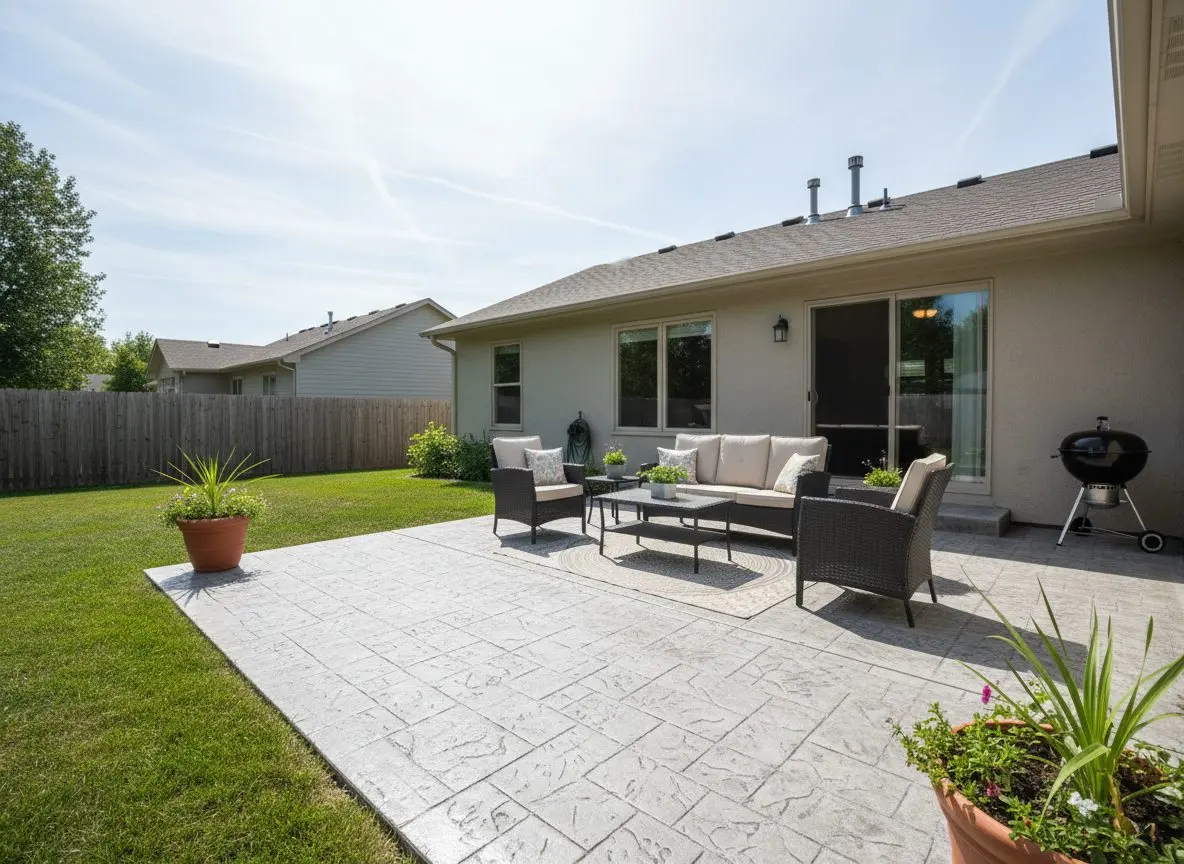
Road salt strips an under-sealed surface fast, freeze-thaw works at stamped joints not tooled to move, and there is a narrow window each year to color and stamp at all.
- Road salt on a poorly sealed surface
- Deicing salt spreads on stamped concrete same as a plain driveway. A weak sealer shows damage first in the color, not just as scaling. A sealed finish sheds salt water, the difference between a patio new after five winters and one faded and pitted.
- Freeze-thaw working at the stamped joints
- A pattern tooled with joints along its lines moves through winter the way plain concrete does, opening at the joint instead of cracking through the pattern. One stamped without joints placed properly cracks where the design never planned for it.
- A narrow window to color and stamp at all
- Color and stamping need concrete to stay workable long enough to detail the pattern, a window this area holds only in warmer months. We book that work around it, apart from the wider pour season, since a rushed pattern sets before it is detailed.
Stamped and decorative concrete around McLean County
Recent stamped, stained and polished work around Bloomington and Normal, with the town and the finish chosen for each one.
-
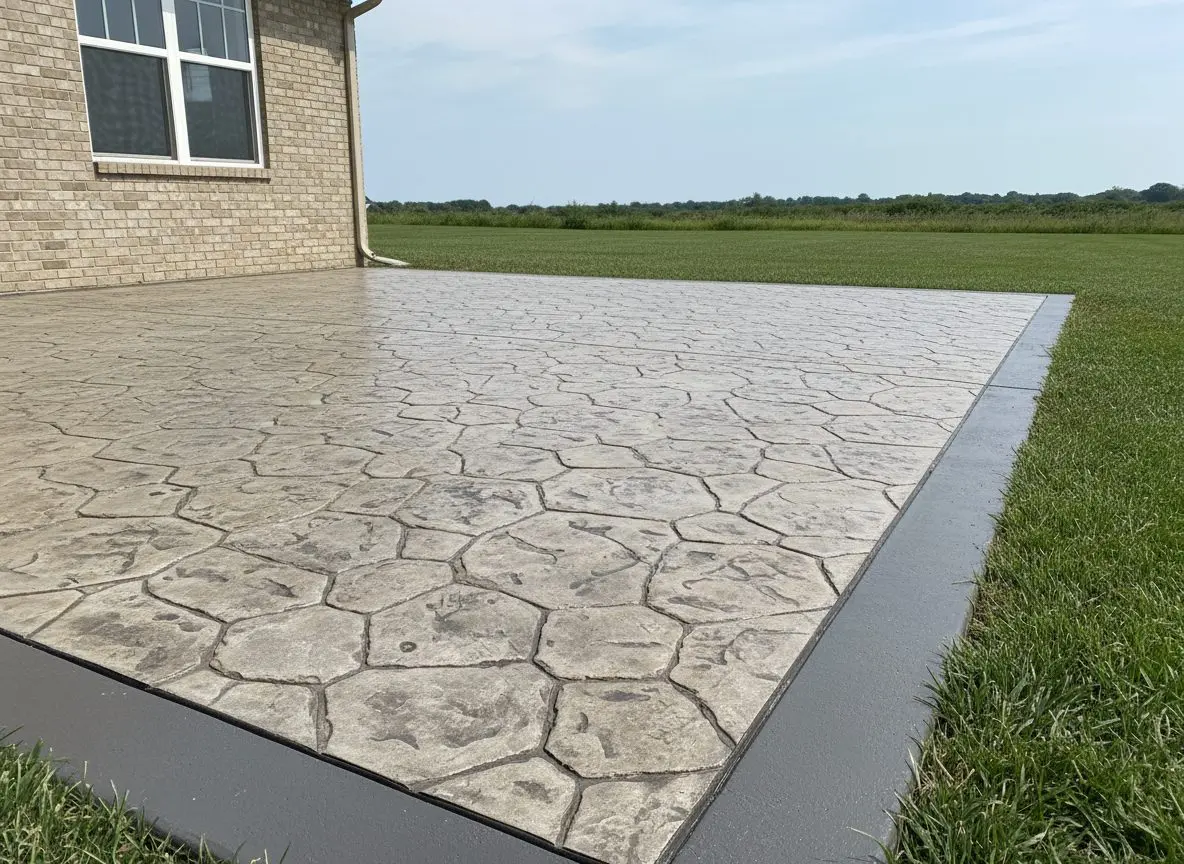
Stone-pattern stamped patio
Bloomington
A running-bond stamped pattern in a warm buff integral color, sealed with a polyurethane rated for salt before the first winter.
-
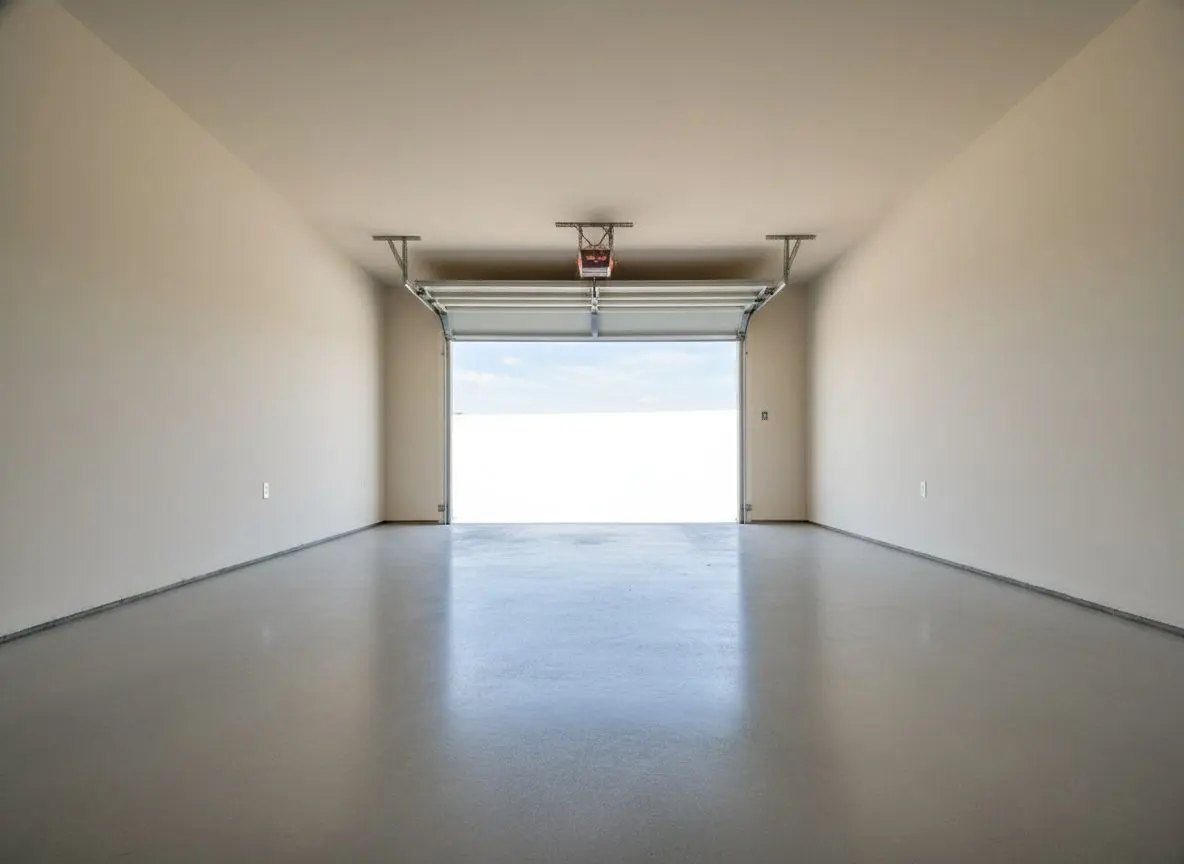
Polished garage floor
Normal
An existing plain garage slab ground and polished to a satin finish, chosen for how much easier it is to keep clean through winter.
-
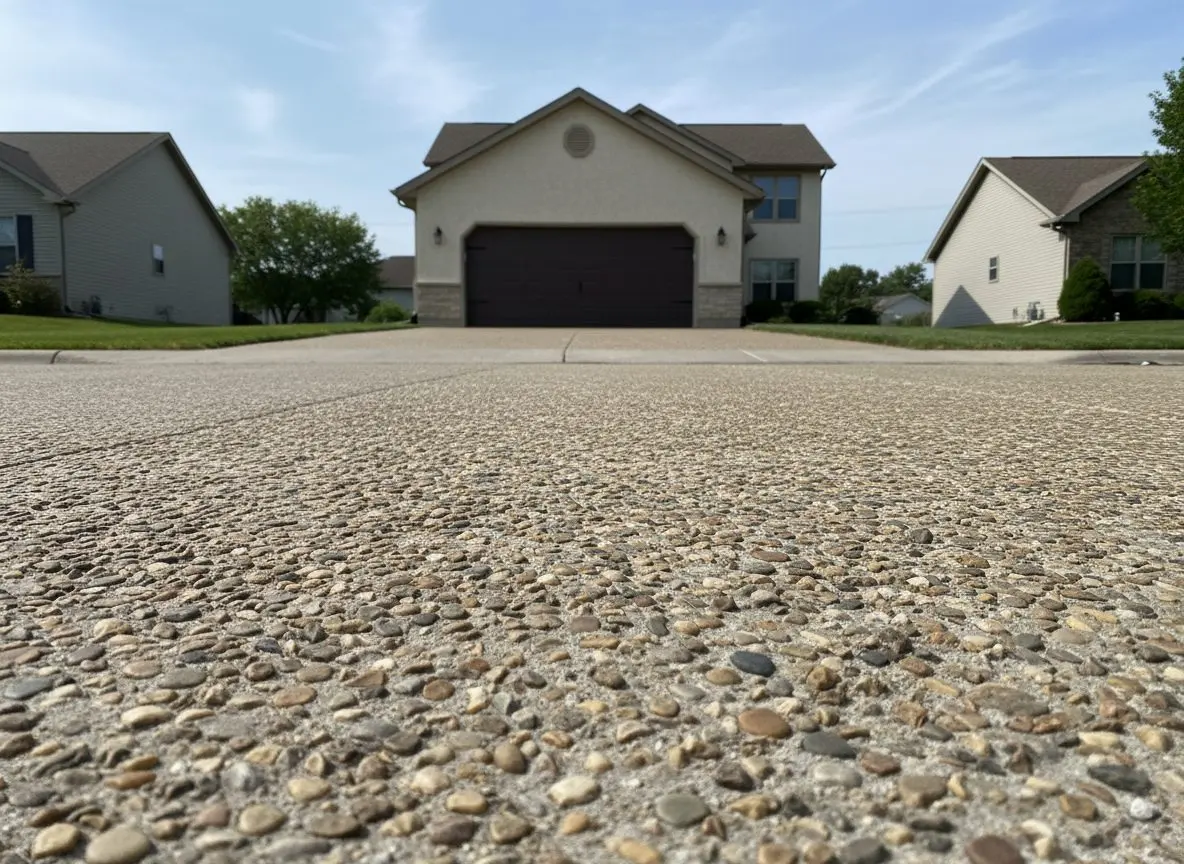
Exposed aggregate driveway
Hudson
A full driveway seeded and washed to a consistent aggregate depth, replacing a plain slab that had scaled badly over several winters.
-
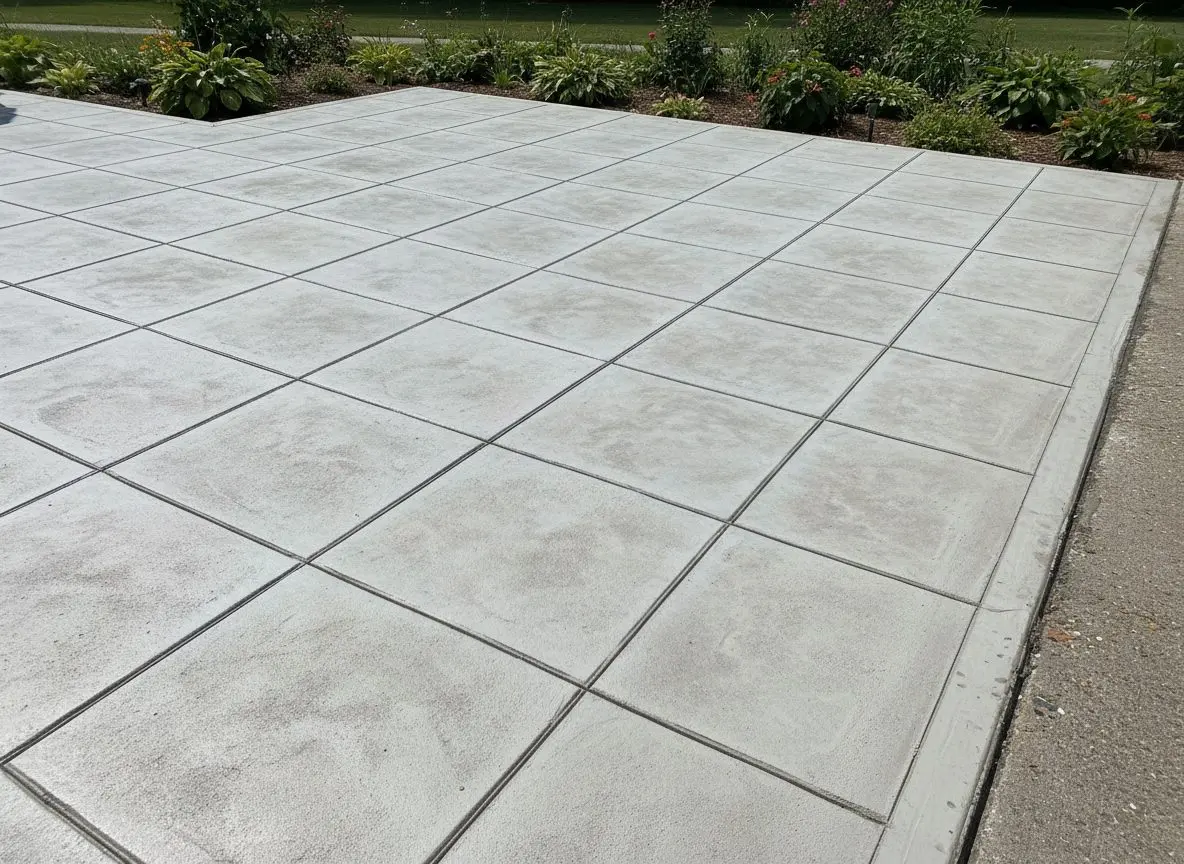
Decorative overlay on old patio
Downs
A sound but worn plain patio resurfaced with a stamped overlay rather than a full demolition, saving the cost of tearing out a slab with no structural problem.
-
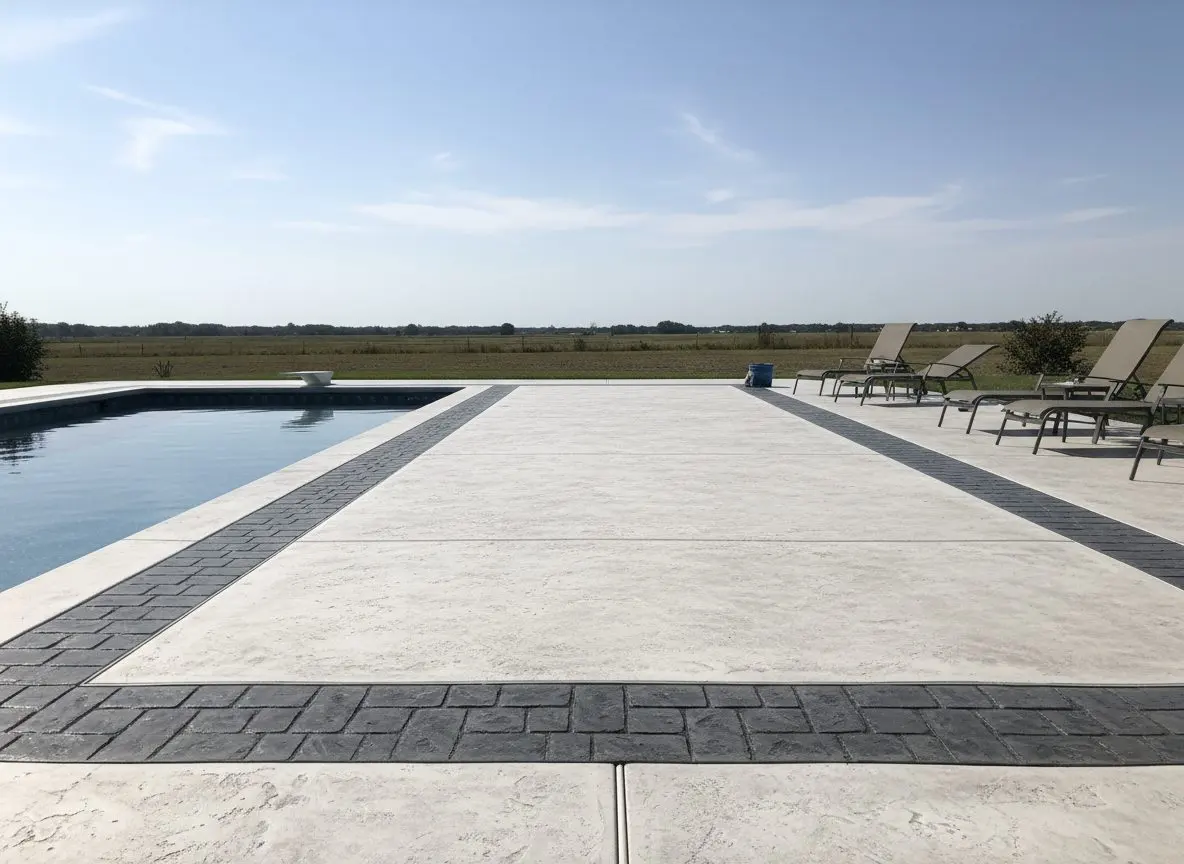
Multi-color stamped pool deck
Heyworth
A two-color stamped pattern around an existing pool, hand-detailed at every curve and sealed with an anti-slip additive.
-
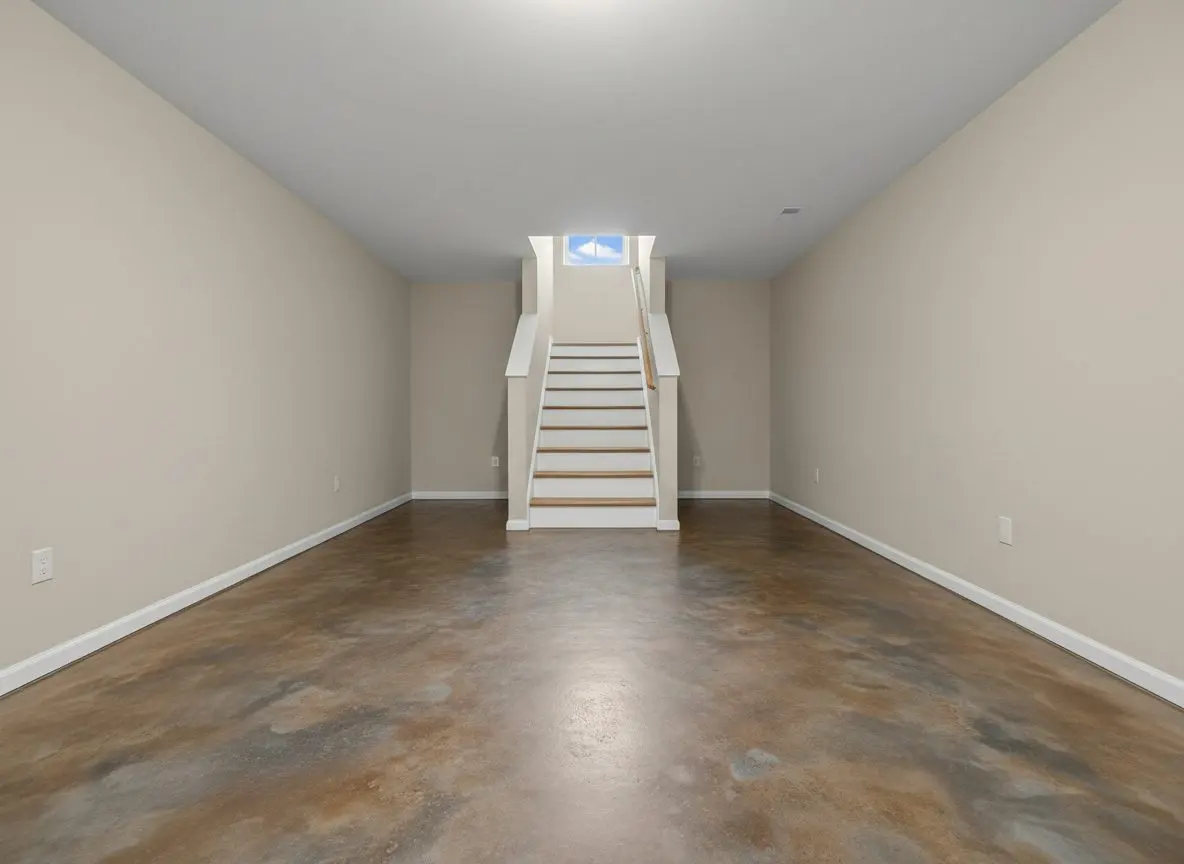
Stained basement floor
Danvers
An existing basement slab acid stained in a mottled charcoal finish and sealed, ahead of the space being finished for living use.
What customers said about the finished look
-
Rated 5 out of 5
City tagged the two sidewalk squares in front of our house back in June. They cut them out and repoured on a Tuesday morning. Nothing else to say about it.
Doug H. Towanda Concrete Repair -
Rated 5 out of 5
Our driveway lifted at the apron every winter until it cracked right across. When they broke it out they hit an old asphalt layer nobody knew about, which added a day. Flat through two winters now.
Renee B. Carlock Driveways and Parking -
Rated 5 out of 5
We left the patio too late and October was closing in, so they poured on the first dry week and said the sealer would wait until spring. It did. My husband still checks the slope when it rains.
Terry S. Downs Patios and Walkways
Call (309) 555-0142 for a free estimate on a stamped, stained or polished finish, color and pattern samples included.
Get a free quoteFAQs
Frequently asked questions
Decorative concrete questions we hear most in Bloomington
How often does stamped concrete need to be resealed?
Every two to three years is typical for a driveway or patio exposed to weather and salt, and more often on a surface with heavy foot traffic or regular deicing. A sealer worn thin shows as a duller, less water-repellent surface before real damage appears, which is the point to reseal.
Does road salt actually damage stamped or stained concrete?
Salt itself does less damage than what happens under a weak sealer, moisture and salt working together through freeze-thaw cycles pitting and fading the surface. A properly sealed decorative finish sheds that water and holds up through normal winter salting far better than an unsealed or under-sealed one does.
Can my existing plain driveway be resurfaced decoratively?
Often, yes, with a decorative overlay bonded to the existing slab, as long as the concrete underneath is sound and not actively cracking or settling. We check the slab's condition on the visit, and if it is not sound enough for an overlay, we will tell you plainly rather than apply one that will fail.
What is the difference between integral color and a stain?
Integral color is mixed into the concrete before it is poured, so it runs through the full depth and a chip or deep scratch does not show gray underneath. A stain is applied to concrete that already exists, coloring the surface rather than the whole slab, the right choice for a floor poured plain but sound.
How long does a stamped pattern actually last?
The pattern itself is pressed into the concrete and does not wear away, but the sealer protecting it does, and a surface left unsealed for years will fade and pit at the texture's high points first. Resealed on schedule, a stamped surface holds its look for decades rather than years.
Can garage or basement floors be polished, or only stained?
Both are options, and they solve different problems. Staining changes the color of an existing floor without altering its surface. Polishing grinds the surface to a smooth, reflective finish, which also makes it easier to clean and more resistant to tire marks and tracked-in salt.
What temperature is needed to pour colored concrete?
Coloring and stamping both need the concrete to stay workable long enough to detail the pattern properly, a narrower window than a plain pour needs. We book that work for the warmer months, and will tell you honestly if a request falls outside a reliable window rather than rush a pattern that will not set right.
Will the color fade over time?
Integral color mixed through the slab does not fade the way a surface stain can, since a worn top layer still shows the same color underneath. UV exposure softens any concrete color slightly over years, one more reason the sealer's own UV stability matters, since it does most of the protecting.
Does exposed aggregate need special maintenance?
It needs sealing on the same schedule as any other decorative finish, every two to three years, and the exposed stone texture holds dirt slightly more than a smooth stamped surface, so an occasional pressure wash keeps it looking its best between resealing.
Can you match a new stamped patio to my existing walkway?
Usually, though an exact match to concrete poured years ago is rarely perfect since color and texture both weather over time. We will bring samples and talk through what a close match actually looks like before anything is poured, rather than promise an exact one.
Is deicing salt safe to use on stamped or sealed concrete?
A properly sealed surface handles normal deicing salt without issue, and the sealer is exactly what makes that true. Calcium chloride and rock salt are both harder on an unsealed or poorly sealed surface, which is one more reason resealing on schedule matters more here than in a milder climate.
How much notice do you need for a stamped patio in season?
One to three weeks is typical, though color and stamp work books up faster than plain concrete because the workable weather window is narrower. Spring and early summer fill first, so a patio planned for that stretch is worth calling about as soon as you have decided on a pattern.
Bloomington Concrete Pros
We have been pouring concrete around Bloomington and Normal since 2008.
Bloomington Concrete Pros pours driveways, patios, slabs and foundations across Bloomington, Normal and the rest of McLean County. We handle new pours, removal and replacement of failed slabs, and repair on concrete that is cracking or settling with the freeze and thaw. Every job gets a free estimate before anything is scheduled.
Why call a crew that already knows this ground?
- 18 years pouring concrete in Bloomington and Normal
- Free estimate before any work is scheduled
- You get a callback the same day, every time
- General liability and workers compensation cover
- We work around the pour window, not against it
Concrete poured without allowing for how this ground moves cracks at the joints by the first winter, and a slab poured on a rushed schedule rarely cures the way it should. We plan around both, from the mix we choose to the week we book the pour. Call (309) 555-0142 for a free estimate, and we will come out and measure before you decide on anything.
Give us a call
office@bloomingtonconcretepros.com
Send us a message
315 E Front St, Bloomington, IL, 61701
Where to find us