
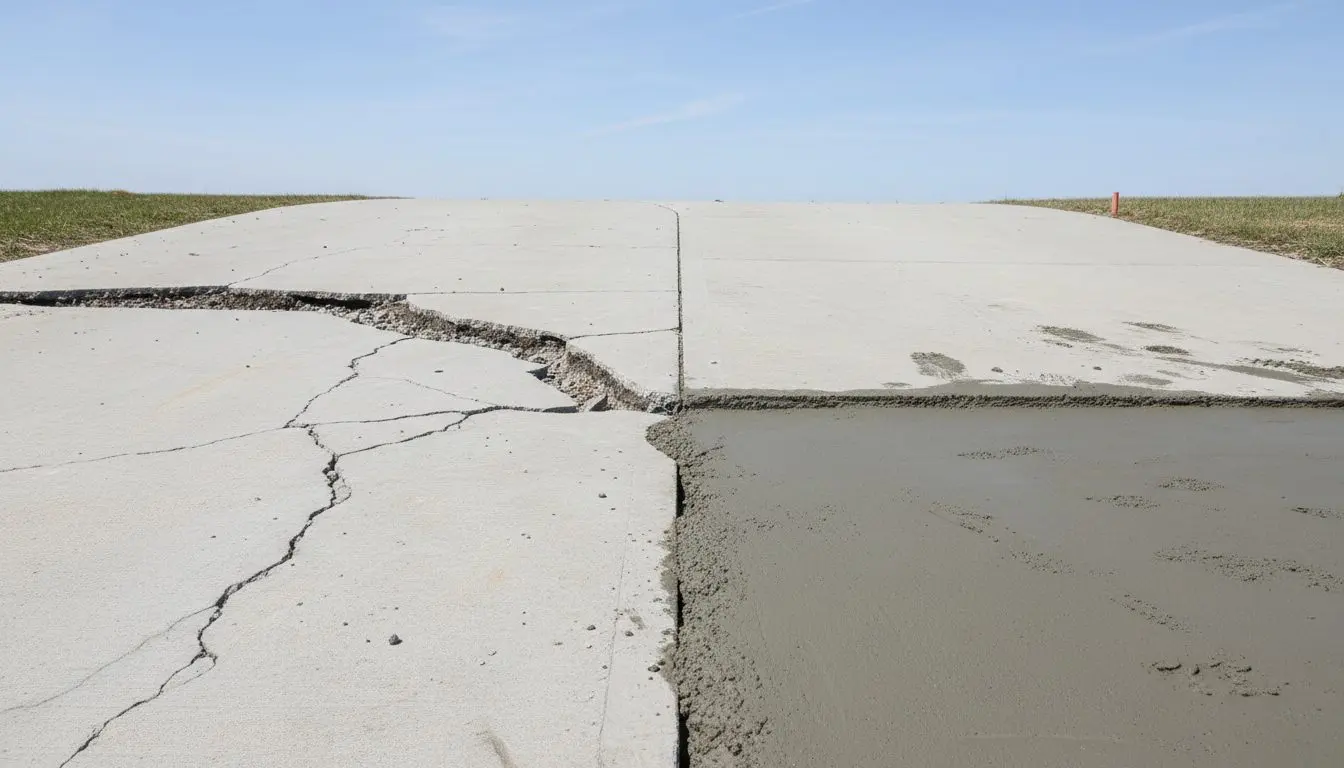
Concrete Repair in Bloomington
Concrete Repair, Diagnosed Before It Is Priced
Every crack is read on site before it is patched, settled slabs relevelled instead of torn out where the base allows, resurfacing quoted only where it will bond.
Why concrete cracks, settles or scales in Bloomington
You get a straight answer on whether your concrete can be repaired or genuinely needs to come out, before it gets quoted.
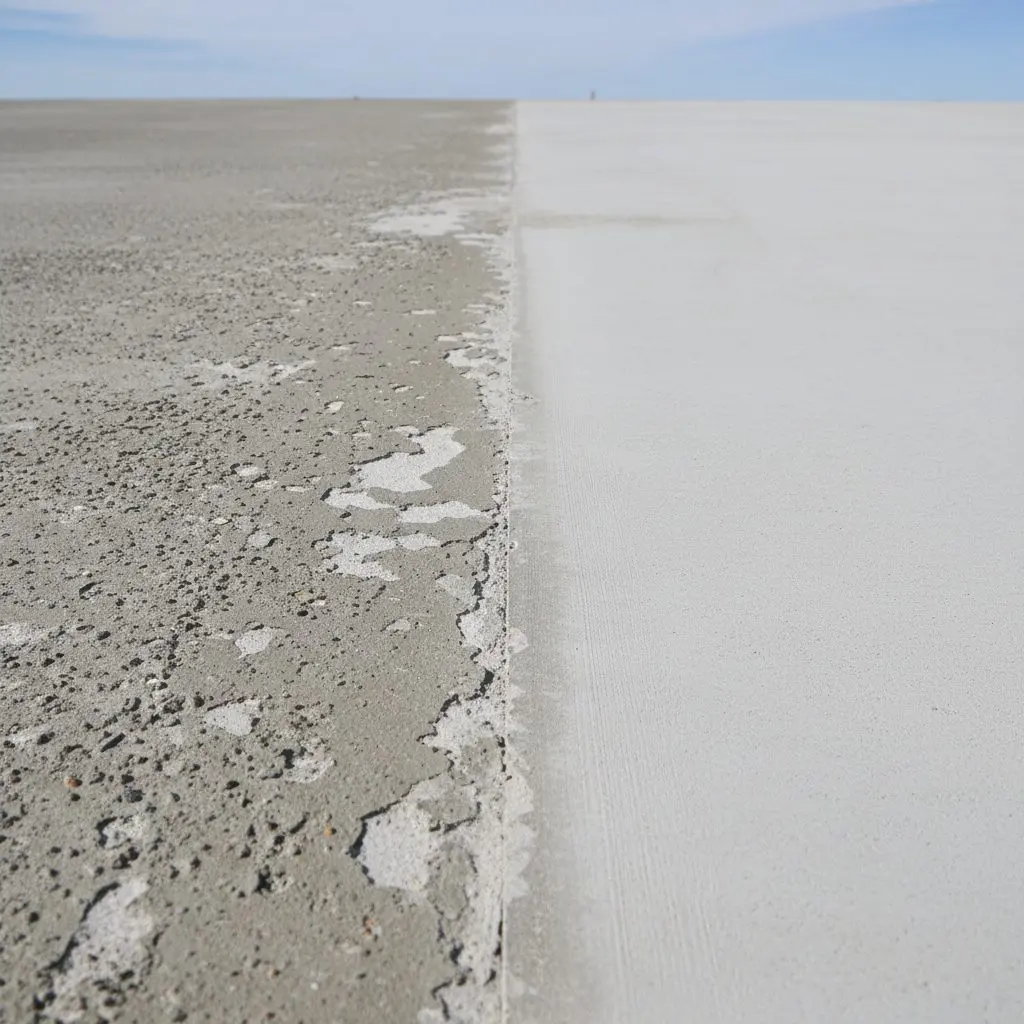
This group covers cracked, settled or scaling concrete, driveways, patios, walks and steps poured a while ago and now failing. Crack repair, lifting, resurfacing and replacement all sit here.
A new footing or first-time slab is Foundations and Slabs, not repair. Restoring sound concrete purely for the look of it is closer to Decorative Concrete.
We have diagnosed and repaired failing concrete on more than 400 driveways, patios and walks around Bloomington and Normal since 2008.
Settlement is the most common call, a slab or panel dropped or tilted at one edge while the rest stayed level. Cracking from freeze-thaw is close behind it, then scaling where salt has worked into a poorly finished surface over several winters. Less often, a full slab comes out because the base itself failed.
Every job starts with sounding and tapping the slab to find out whether the base is still solid, because that answer decides whether a repair will hold or just delays a replacement.
A homeowner with a heaved driveway panel wants to know if it can be lifted rather than torn out. A landlord with a parking area scaling worse every winter wants to know if resurfacing will stop it.
Call (309) 555-0142 for a free repair estimate. You will go from wondering whether that crack is getting worse to knowing exactly what caused it and what it will take to fix.
What our concrete repair work covers
The same crew diagnoses, quotes and does the repair, so nobody is guessing at what a subcontractor already found.
- Crack routing and sealing
- Slab lifting and relevelling
- Spalled and scaled surface resurfacing
- Full slab removal and replacement
- Control joint resealing
- Step and stoop repair
- Salt-damage scaling repair
Repair or replace, which one your concrete actually needs
Most cracked or settled concrete can be repaired rather than torn out.
A crack over a base that is still sound, or a panel settled less than about two inches, is almost always a repair. Routing and sealing the crack or lifting the slab with foam injection costs a fraction of replacement and holds for years when the ground underneath it is not the problem.
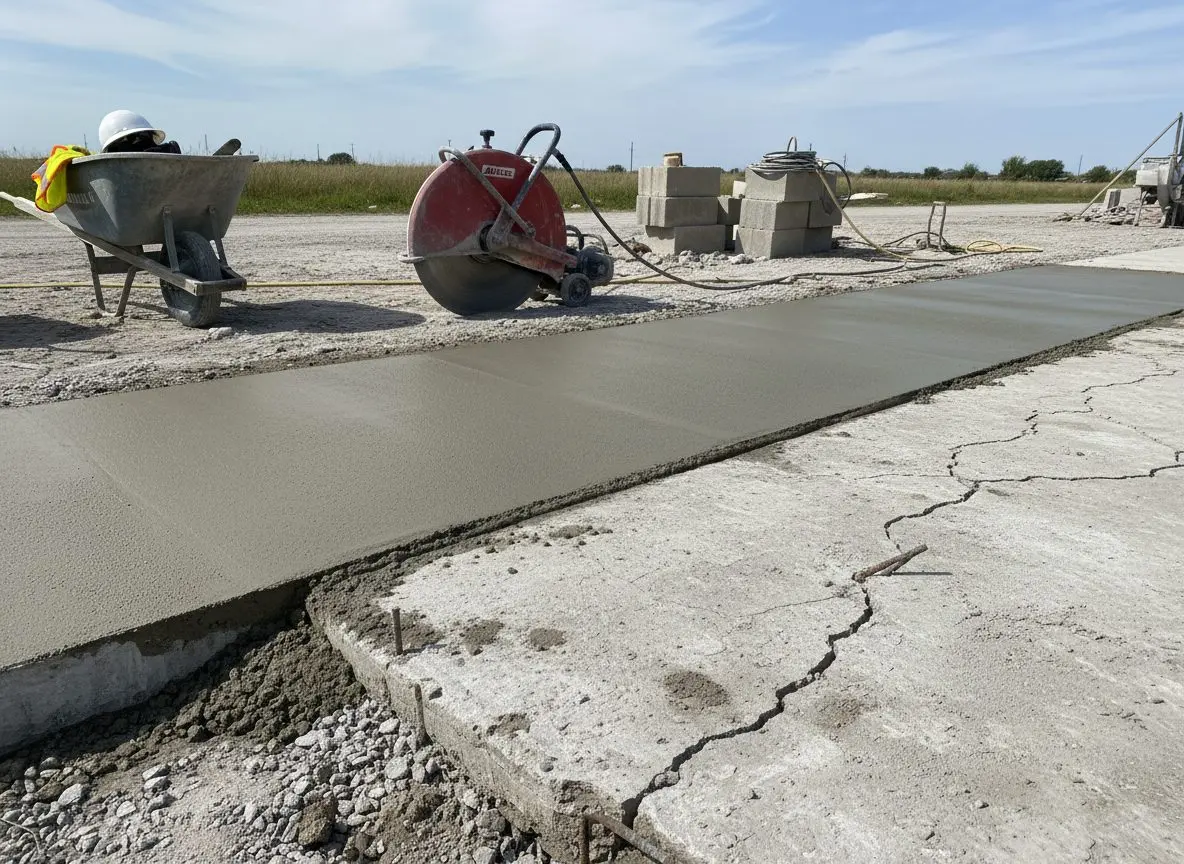
A slab with a washed-out or badly settled base, cracking through the full depth of the concrete, or scaling covering most of the surface rather than one patch is past what a repair can fix. Patching concrete like that buys a season, not a solution, and the honest answer is to take it out and start again.
We will tell you which one applies on the visit, sounding the slab and checking the base before we recommend anything, including on the jobs where repair is the cheaper and correct answer.
How we diagnose before we repair anything
Every repair starts with why the concrete failed, not with what it happens to look like today.
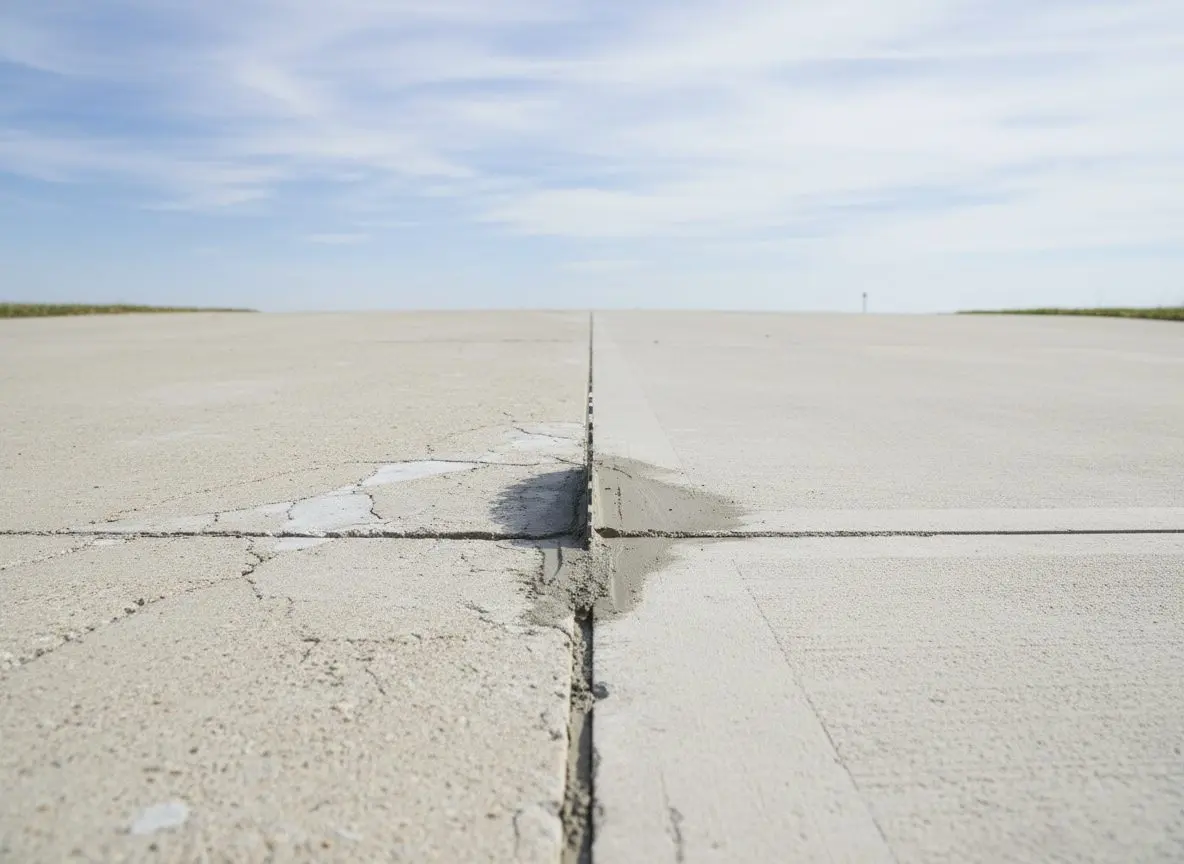
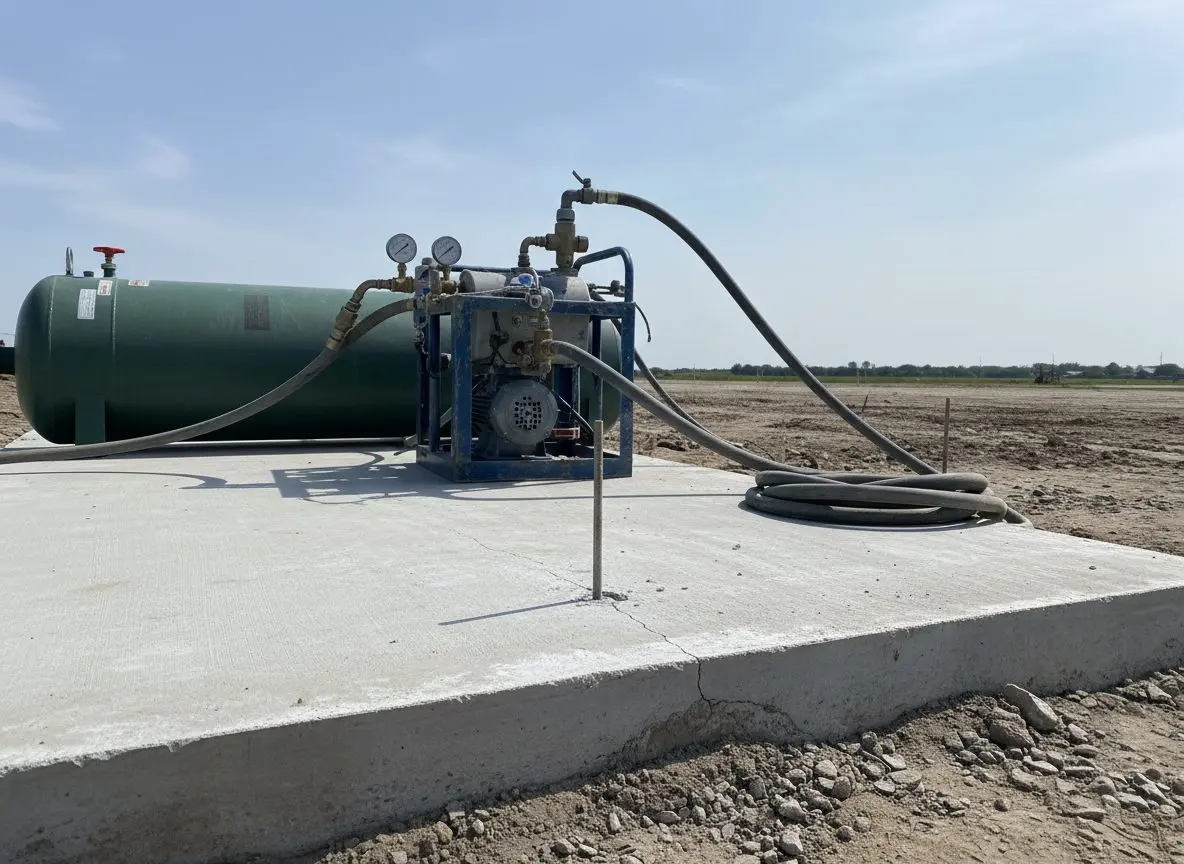
A slab is sounded and tapped before anything is quoted, because a hollow response under a crack means the base has failed, where a solid response means the crack is cosmetic. Settled panels within two inches of level are lifted with foam, which cures in under an hour and adds no weight to ground that already proved it cannot carry a full load.
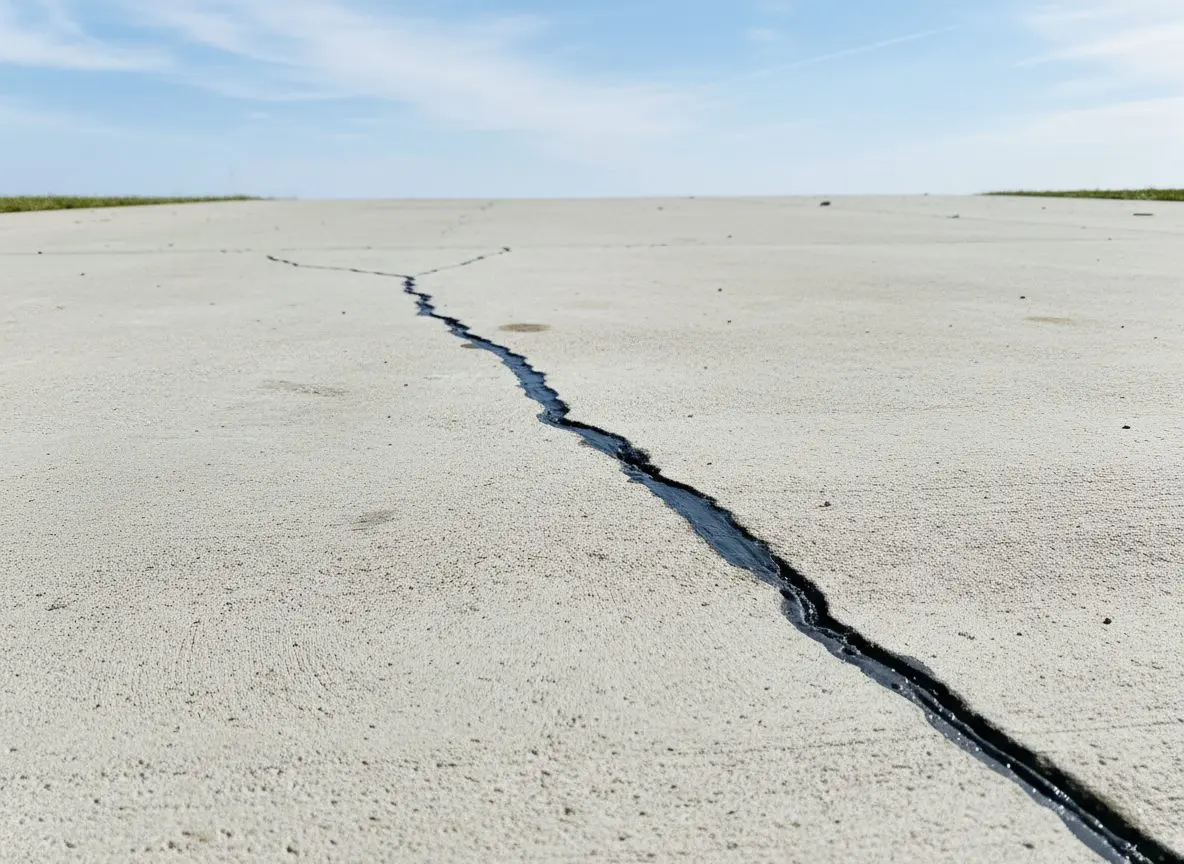
Cracks wider than a quarter inch are routed and filled with polyurethane sealant rather than a rigid patch, because a rigid filler cracks again at the same joint. A section too far gone is saw cut to the nearest joint and replaced full depth, and an overlay is never applied at less than an inch and a half, because anything thinner debonds here.
- Sound-and-tap base check before any repair is quoted
- Polyurethane foam injection to relevel settled slabs
- Routed and sealed cracks over a quarter inch wide
- Full-depth saw cut and replacement at the nearest joint
- 1.5-inch minimum bonded overlay for resurfacing work
- Self-leveling polyurethane sealant in reworked joints
Call and we will sound the slab before telling you whether it needs a patch, a lift or a full replacement.
(309) 555-0142Why does one cracked driveway cost more to fix than another?
You have seen how we diagnose before repairing. What actually sets the price is what is happening under the slab, not how big the crack looks from the driveway.
- Extent of cracking or settlement
- One hairline crack is a routing and sealing job measured in minutes. A panel that has dropped an inch and cracked in three places is a different scope of work entirely, even on the same size slab.
- Condition of the base underneath
- A base that only needs foam injected under it costs far less to fix than one that has to be dug out, replaced and recompacted before new concrete goes back on top.
- Repair versus full replacement
- Lifting or patching a slab with a sound base is quicker and cheaper than saw cutting it out and pouring new concrete, which is why the diagnosis on the first visit matters more than the crack's appearance.
- Matching an aged, weathered surface
- Resurfacing or patching a slab that has to blend into decades-old concrete takes more care with color and texture than replacing a section where nothing needs to match.
- Access for equipment
- A slab the truck or the saw cannot reach directly means more work gets done by hand, and that adds real hours to jobs that would otherwise move quickly for the same size.
- Disposal of the old slab
- Breaking out and hauling away a full driveway is a bigger disposal job than removing one small section, and that volume is priced separately from the new pour.
Which of these apply becomes clear once somebody has sounded the slab and seen what the crack is actually doing. Get a free quote
From the first call to a slab you can use
Most jobs run one to two weeks from that first call to a finished pour, and the pour itself takes just one day.
Call (309) 555-0142 for a free estimate, or ask us to come out and measure before you decide on anything.
Get a free quoteWhat unrepaired concrete costs you at resale
No published report prices concrete repair, because it is a maintenance cost rather than a project a buyer shops for.
Kitchen and bathroom remodeling studies price whole projects a buyer chooses to take on, and concrete repair does not fit that category. It is closer to a roof or a furnace, work protecting value rather than adding it, and no regional report puts a resale percentage on fixing a cracked driveway.
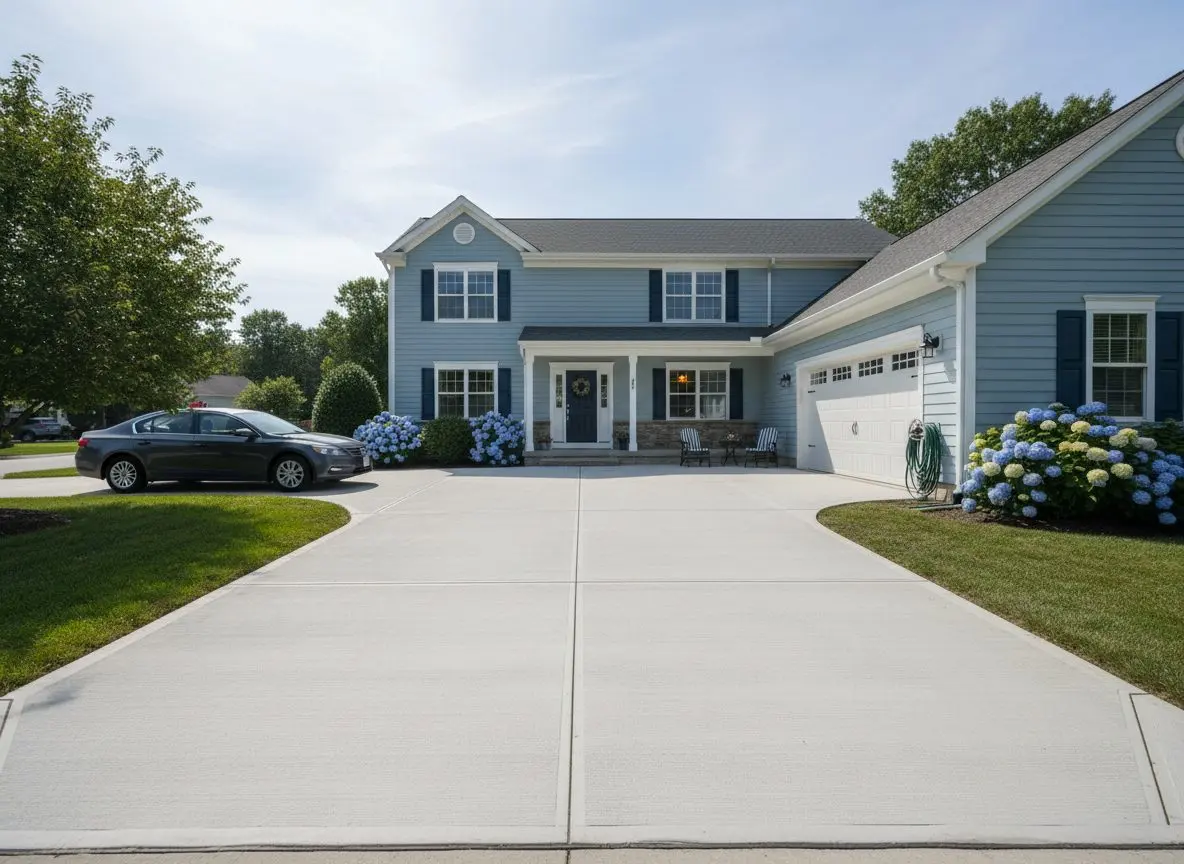
What repair does protect is the inspection. Cracked, settled or trip-hazard concrete is one of the most commonly flagged items on a home inspection, and a buyer's agent uses it as a negotiating point whether the crack is serious or not. A driveway properly repaired removes that line from the report before it is written, where a slab left cracking becomes a credit the seller pays at closing.
Why concrete fails differently in McLean County
Freeze-thaw heaves what is under a slab, corn belt clay pushes at the subgrade through the year, and road salt eats a poorly finished surface faster than most homeowners expect.
- Freeze-thaw heave under the slab
- Water trapped under a slab expands when it freezes and contracts as it thaws, and repeated cycles through winter walk a panel out of level. By spring a driveway fine in October has a lip at one joint, damage done months before anybody noticed.
- Corn belt clay moving through the seasons
- The clay subgrade under most local lots swells when wet and shrinks when dry, and a slab poured on clay settles unevenly wherever moisture underneath is uneven. It is the most common reason one panel drops while the one beside it stays level.
- Road salt on a poorly finished surface
- Salt spread on concrete not properly air-entrained or finished works in, and freeze-thaw inside that damp concrete spalls the surface into flakes over a few winters. A slab poured to the right air content resists it, one that was not shows it first.
Concrete repair work around McLean County
Recent repair and resurfacing work around Bloomington and Normal, with the town and what the concrete actually needed.
-
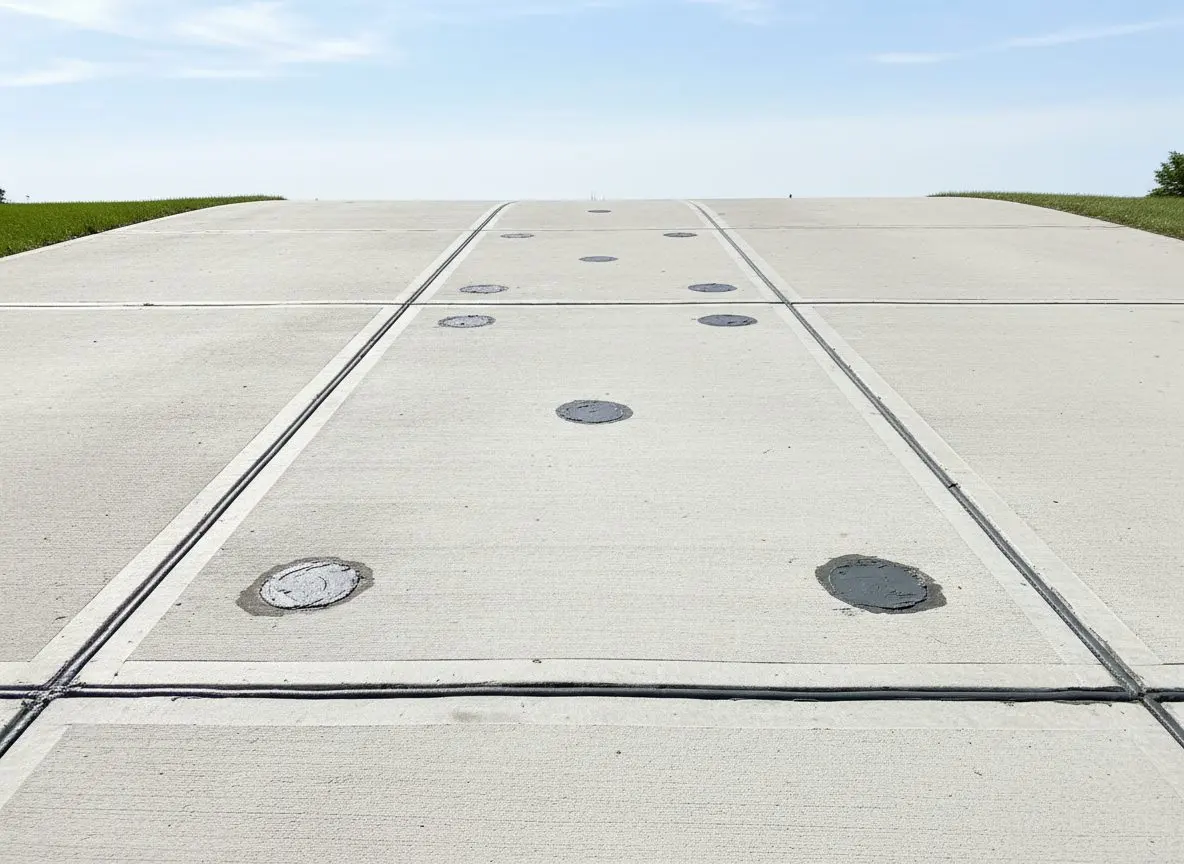
Driveway panel lift and seal
Bloomington
A settled panel lifted just under two inches with foam injection, then the joint sealed with polyurethane to keep water out going forward.
-
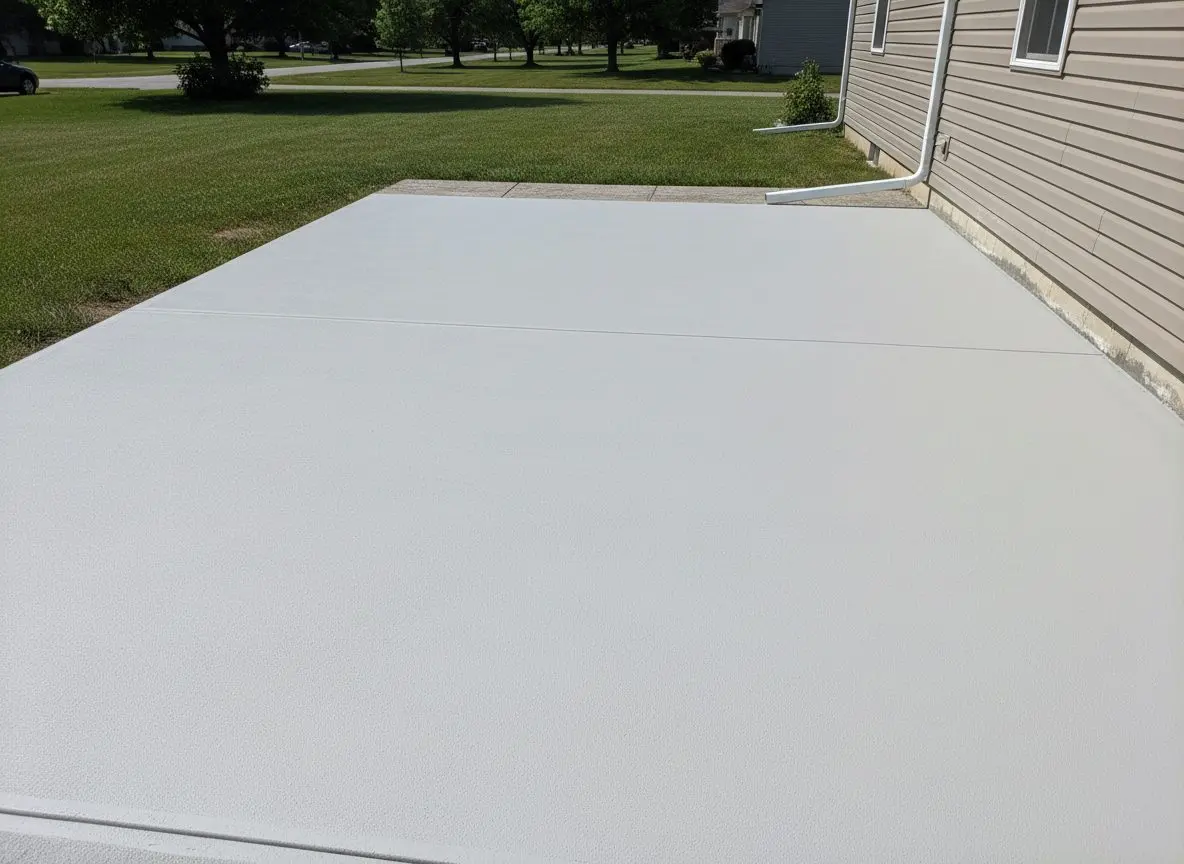
Salt-damaged patio resurfacing
Normal
A scaled and pitted patio surface ground back and resurfaced with a bonded overlay after years of salt tracked off a nearby walk.
-
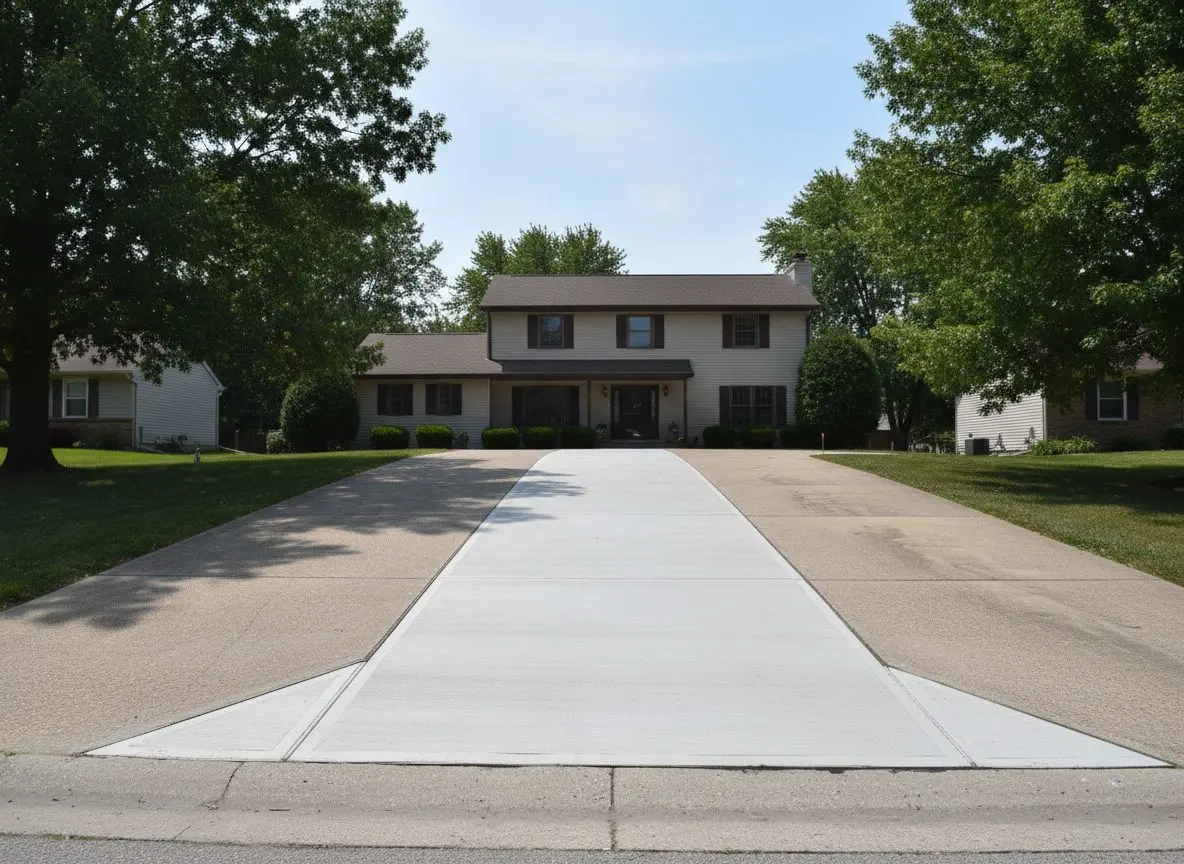
Full driveway section replacement
Downs
One badly settled panel saw cut to the nearest joints and replaced full depth after sounding showed the base underneath had washed out.
-
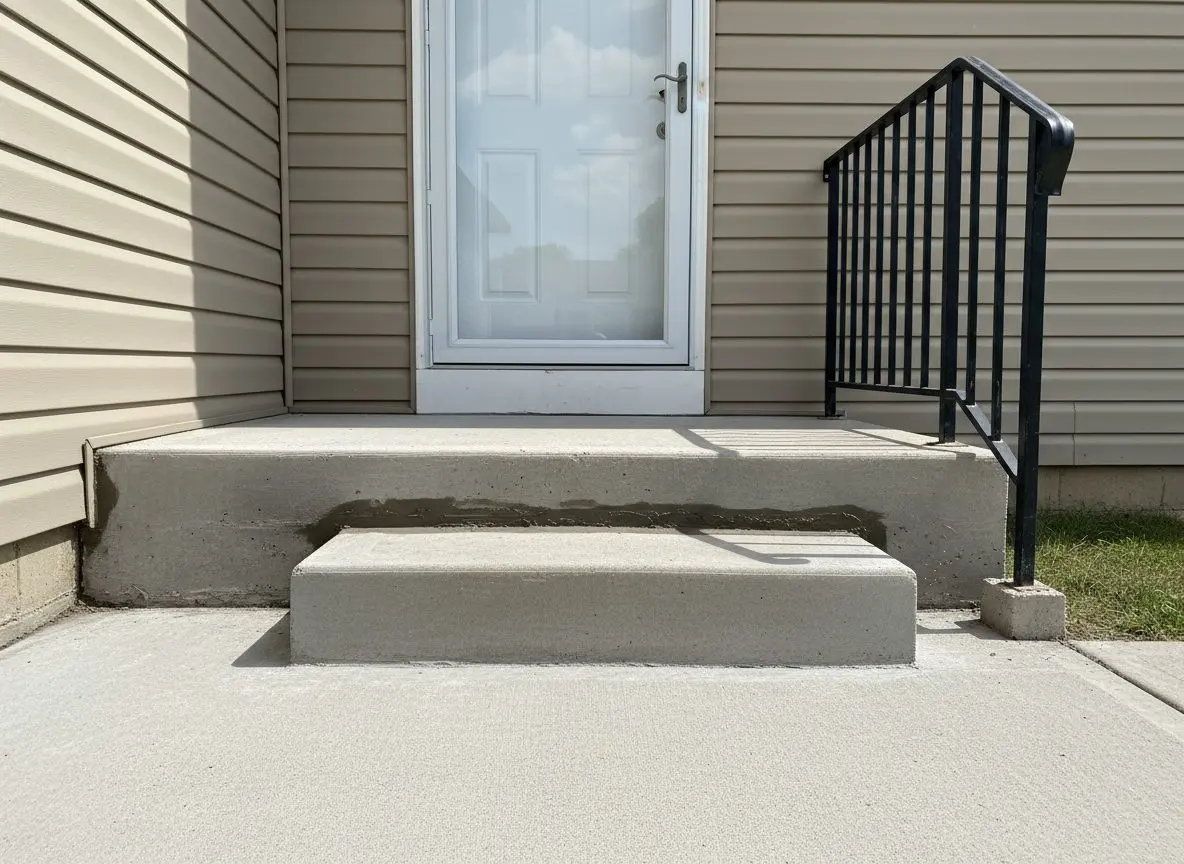
Front step and stoop repair
Heyworth
Cracked treads routed and sealed and a settled bottom step relevelled, after several winters of freeze-thaw movement in a small footprint.
-
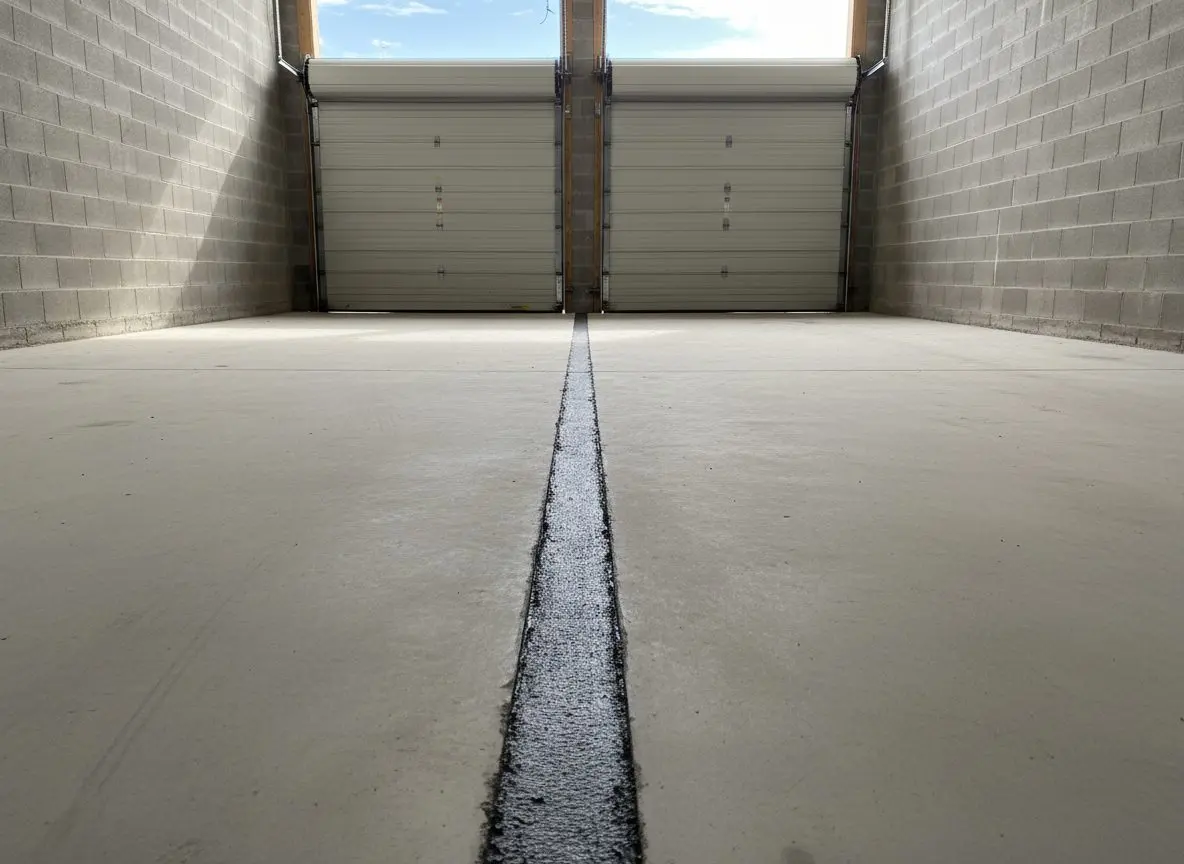
Cracked garage slab evaluation
LeRoy
A structural crack sounded and traced back to a failed base, leading to a partial replacement rather than a surface patch that would not have held.
-
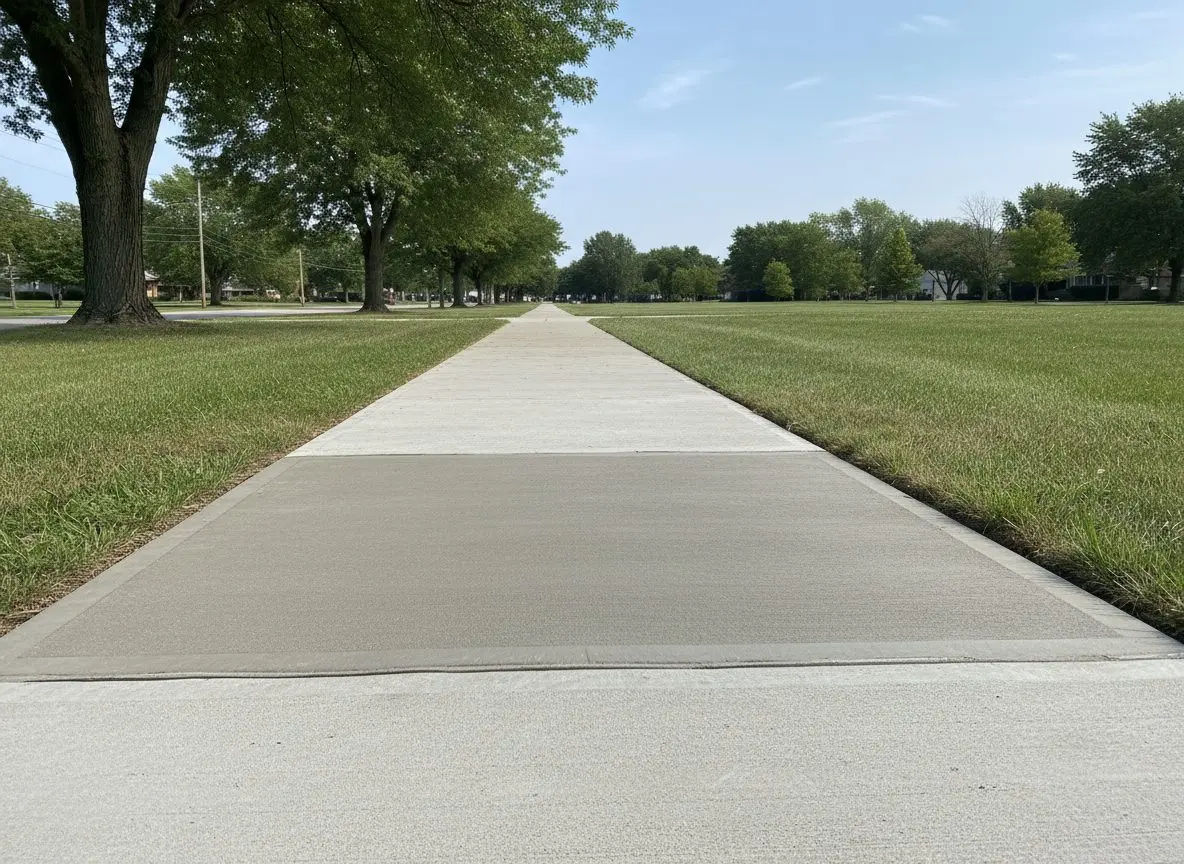
Sidewalk trip hazard repair
Towanda
Two heaved sidewalk panels ground level at the joint and sealed, resolving a trip hazard without a full section replacement.
What customers said after a repair held up
-
Rated 5 out of 5
City tagged the two sidewalk squares in front of our house back in June. They cut them out and repoured on a Tuesday morning. Nothing else to say about it.
Doug H. Towanda Concrete Repair -
Rated 5 out of 5
Our driveway lifted at the apron every winter until it cracked right across. When they broke it out they hit an old asphalt layer nobody knew about, which added a day. Flat through two winters now.
Renee B. Carlock Driveways and Parking -
Rated 5 out of 5
We left the patio too late and October was closing in, so they poured on the first dry week and said the sealer would wait until spring. It did. My husband still checks the slope when it rains.
Terry S. Downs Patios and Walkways
Call (309) 555-0142 for a free repair estimate, and we will sound the concrete before telling you what it needs.
Get a free quoteFAQs
Frequently asked questions
Concrete repair questions we hear most in Bloomington
Can a cracked driveway be fixed, or does it need replacing?
Most cracks can be repaired if the base under the slab is still sound, which is the first thing we check on every visit. A crack over a failed base, or one running through the full depth of the concrete, is a sign the slab has to come out, and we will tell you plainly which applies before quoting anything.
How do you tell if a crack is just cosmetic or a real problem?
We sound and tap the slab around the crack. A solid response means the base is still doing its job and the crack is a surface issue. A hollow response means the ground underneath has moved or washed out, and a surface patch over that will fail again within a season or two.
What is mudjacking and does it actually last?
We lift settled slabs with polyurethane foam injected through small drilled ports, rather than the heavier grout traditional mudjacking uses. It cures in under an hour and adds no weight to ground that already cannot fully support a slab, which is why it holds where a heavier fill sometimes settles again.
My driveway is flaking on the surface, what caused that?
That is scaling, usually from road salt working into concrete that was not properly air-entrained or finished when poured. Freeze-thaw inside the damp, salt-affected concrete pops flakes off the surface over a few winters. Resurfacing with a bonded overlay fixes the look and protects it going forward.
Can concrete be repaired in the winter?
Crack sealing and foam injection can often be done in colder weather, since neither needs a full cure period the way a fresh pour does. Full replacement follows the same pour window as new concrete, and we will tell you honestly if a job needs warmer weather rather than force a bad pour.
Will a repaired driveway match the rest of the concrete?
A crack repair or overlay is color matched as closely as concrete allows, but aged concrete has weathered in ways a repair cannot replicate. On a full replacement the new section is a different pour date from the old, and some visible difference at the joint is normal rather than a sign of a bad job.
How long does a typical repair take?
Crack routing and sealing is usually a single visit. Foam injection to relevel a settled slab takes a few hours and the surface can be walked on the same day. A full section replacement follows the same removal, pour and cure schedule as new concrete, roughly a week from breaking out the old slab to full use.
Is a settled slab a sign my foundation is moving?
Usually not. A settled driveway or patio slab and a house foundation are typically on separate footings, and slab settlement is almost always a subgrade issue under that specific pour rather than a sign the house itself is moving. We will tell you if what we see suggests otherwise, which is rare.
Why does my driveway keep cracking at the same spot every year?
A control joint that was cut too shallow or spaced too far apart lets the slab crack somewhere other than where it was designed to, and once a crack starts there it tends to reopen at the same point after every freeze-thaw cycle until it is properly routed and sealed rather than just patched over.
Do you repair concrete steps and stoops, or only driveways?
Steps and stoops are some of the most common repair calls we get, because they take a lot of freeze-thaw movement in a small footprint. Cracked treads, settled steps and spalled edges are all repairable the same way a driveway is, once we have sounded the concrete and checked what is underneath it.
What happens if I just leave a crack alone?
Water gets into it, freezes, and widens the crack a little more every winter, which is how a hairline crack becomes a lifting hazard over a few years. Sealing it early is a fraction of the cost of the slab replacement that a neglected crack eventually forces.
How much notice do you need for a repair visit?
A same-day callback is standard, and most repair estimates can be scheduled within a few days. A larger job involving foam injection or a full slab replacement books further out, particularly in spring when everyone is looking at what winter did to their concrete.
Bloomington Concrete Pros
We have been pouring concrete around Bloomington and Normal since 2008.
Bloomington Concrete Pros pours driveways, patios, slabs and foundations across Bloomington, Normal and the rest of McLean County. We handle new pours, removal and replacement of failed slabs, and repair on concrete that is cracking or settling with the freeze and thaw. Every job gets a free estimate before anything is scheduled.
Why call a crew that already knows this ground?
- 18 years pouring concrete in Bloomington and Normal
- Free estimate before any work is scheduled
- You get a callback the same day, every time
- General liability and workers compensation cover
- We work around the pour window, not against it
Concrete poured without allowing for how this ground moves cracks at the joints by the first winter, and a slab poured on a rushed schedule rarely cures the way it should. We plan around both, from the mix we choose to the week we book the pour. Call (309) 555-0142 for a free estimate, and we will come out and measure before you decide on anything.
Give us a call
office@bloomingtonconcretepros.com
Send us a message
315 E Front St, Bloomington, IL, 61701
Where to find us